Dogs experience excitement, frustration, curiosity, and anticipation just like people. However, without proper guidance, these emotions can lead to behaviors such as jumping on visitors, pulling on the leash, barking excessively, chasing moving objects, or struggling to wait. Canine impulse control training programs help dogs develop the ability to pause, respond to commands, and make better behavioral choices, even when distractions are present.
For dog owners working with Rob’s Dog Training, understanding impulse control is an important step toward building a more manageable and rewarding relationship with their pets. Rather than simply correcting unwanted actions, effective training teaches dogs how to regulate their responses and understand what is expected of them in different situations.
What Is Canine Impulse Control?
Impulse control refers to a dog’s ability to resist an immediate reaction and respond appropriately to a situation. For example, a dog with good impulse control can wait before eating, remain calm when someone approaches the front door, or walk past another dog without immediately pulling toward it.
This ability does not develop automatically in every dog. Puppies, adolescent dogs, and highly energetic breeds may need additional guidance to manage excitement and frustration.
Common signs that a dog needs help with impulse control include:
- Jumping on people when greeting them.
- Pulling excessively toward interesting sights, sounds, or smells.
- Barking or lunging when encountering other dogs.
- Grabbing food, toys, or household objects without waiting.
- Running through open doors or gates.
- Struggling to settle down after playtime.
- Ignoring familiar commands when distractions appear.
These behaviors do not necessarily mean a dog is being stubborn or deliberately disobedient. In many cases, the dog has not yet learned how to manage excitement or respond consistently under challenging conditions.
Why Impulse Control Matters in Everyday Dog Training
Impulse control supports more than basic obedience. It helps dogs navigate everyday situations safely while giving owners greater confidence when handling their pets.
Better Leash Manners and Outdoor Behavior
Walks expose dogs to numerous distractions, including passing vehicles, unfamiliar people, other animals, and interesting scents. A dog that reacts immediately to every stimulus can make walks stressful and difficult to manage.
Training teaches dogs to check in with their handlers, respond to leash cues, and maintain a manageable walking pace. Practicing these skills in progressively busier environments helps reinforce calm behavior outside the home.
Safer Greetings and Social Interactions
Excited dogs may jump, bark, or rush toward visitors because they want attention. Although these actions may come from enthusiasm rather than aggression, they can frighten people or accidentally knock someone over.
Teaching a dog to sit or keep all four paws on the floor before receiving attention creates a more predictable greeting routine. Owners can reinforce this behavior by rewarding calm interactions instead of responding to jumping with excitement.
Improved Focus Around Distractions
A dog may understand commands at home but struggle to follow them in a park or unfamiliar environment. This often happens because distractions compete for the dog’s attention.
Impulse control exercises help strengthen attention and responsiveness. With consistent practice, dogs learn that listening to their handlers remains worthwhile even when something more exciting is nearby.
Essential Exercises Used in Canine Impulse Control Training Programs
Effective training programs use practical exercises that gradually teach dogs to pause, focus, and respond before acting. The exercises should match the dog’s age, temperament, learning history, and current abilities.
1. Teach the Wait Command
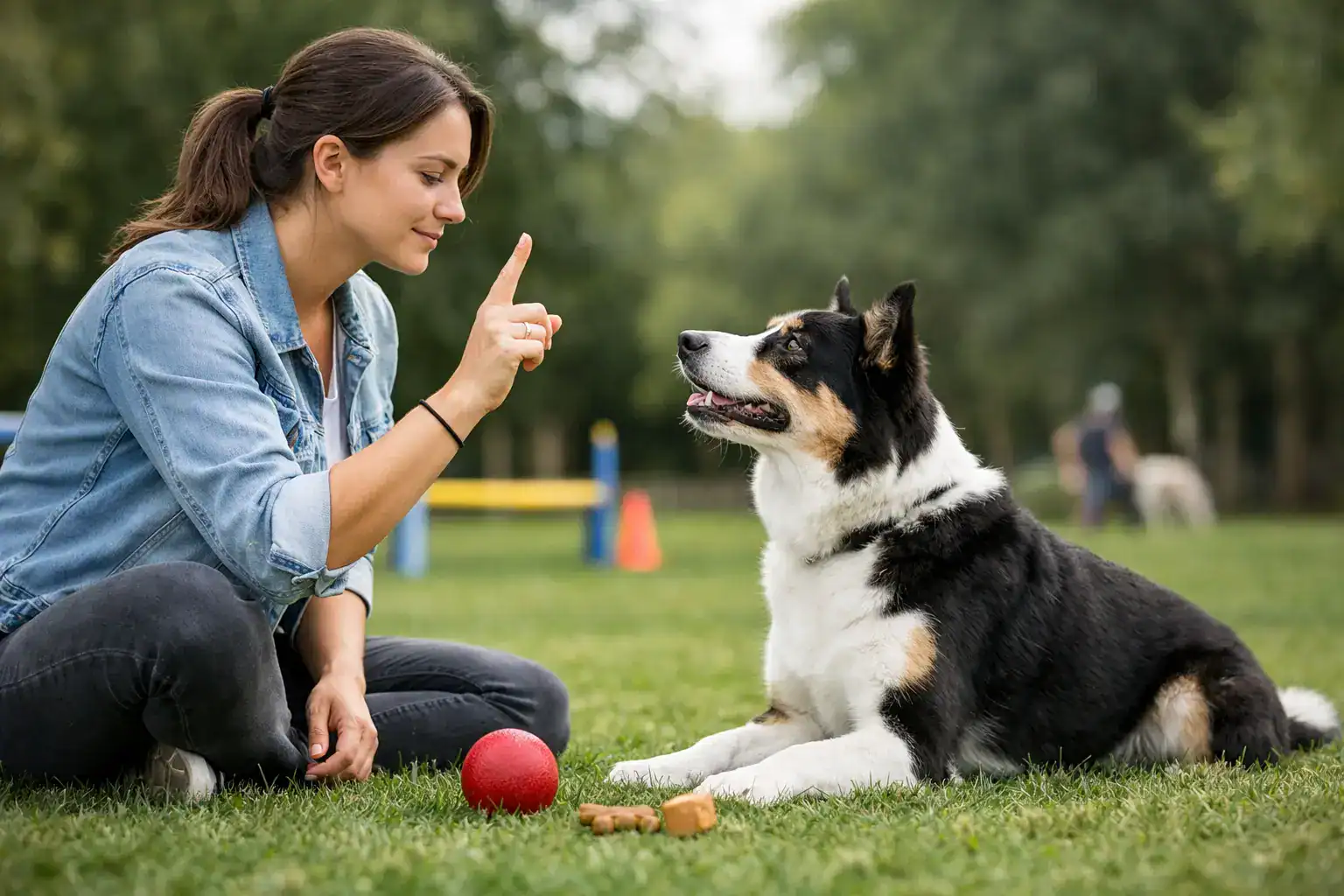
The wait command encourages dogs to pause before moving toward something they want. It can be practiced during everyday routines, including mealtimes, walks, and doorways.
Start with a simple exercise:
- Ask your dog to sit.
- Hold a hand signal or give a consistent verbal cue such as “wait.”
- Pause briefly before allowing the dog to move.
- Reward the dog for remaining in position.
- Gradually increase the waiting time as the dog becomes more comfortable.
Keep early sessions short and reward successful attempts. If the dog moves before being released, make the next repetition easier rather than repeatedly correcting the mistake.
2. Practice Leave It
The leave it command teaches dogs to disengage from something they want. This is useful when encountering dropped food, potentially harmful objects, or distractions during walks.
Begin with a low-value item placed inside a closed hand. Allow the dog to investigate without giving access to the item. Once the dog stops trying to reach it, reward the decision with a separate treat.
As the dog improves, practice with different objects and gradually introduce more realistic situations. Avoid using dangerous objects during training exercises.
3. Reinforce Calm Greetings
Greeting exercises teach dogs that attention and interaction are more likely when they remain calm.
Ask a family member or friend to approach while the dog is on a leash. If the dog jumps, have the person pause or move away. When the dog settles and keeps all four paws on the ground, reward the behavior with attention.
Consistency is important. Everyone who interacts with the dog should follow the same approach so that jumping does not occasionally produce the attention the dog wants.
4. Build a Reliable Stay
The stay command develops patience and helps dogs remain in position despite movement or distractions.
Start by asking the dog to sit or lie down. Give the stay cue, take one small step away, and return to reward the dog if it remains in place.
Increase distance, duration, and distractions gradually. Avoid introducing all three challenges at once because doing so can make the exercise unnecessarily difficult.
How to Make Impulse Control Training More Effective
The success of a training program depends on how consistently owners reinforce the desired behavior. A few thoughtful adjustments can make practice more productive.
Use positive reinforcement. Reward desired actions with treats, praise, toys, or other things the dog enjoys. This helps establish a clear connection between appropriate behavior and positive outcomes.
Keep training sessions manageable. Several short sessions throughout the day are often more practical than one long session. End while the dog is still engaged and able to respond.
Control the difficulty level. Begin in a familiar, quiet environment before introducing more challenging distractions. If the dog repeatedly struggles, reduce the difficulty and rebuild confidence.
Use consistent commands. Family members should agree on the same verbal cues and expectations. Using different words for the same behavior can make learning less predictable.
Reward calm behavior outside formal sessions. When a dog waits patiently, settles on a mat, or chooses not to react to a distraction, acknowledge the behavior. Everyday situations provide valuable opportunities for reinforcement.
Common Mistakes That Can Slow Training Progress
Even well-intentioned owners can unintentionally reinforce behaviors they want to reduce. Recognizing these mistakes helps create a more consistent learning environment.
One common problem is expecting too much too soon. A dog that can wait for five seconds in the kitchen may not be ready to maintain the same behavior near an unfamiliar dog or busy street. Training should progress according to the dog’s demonstrated abilities.
Another mistake is rewarding excitement unintentionally. For example, talking enthusiastically, pushing a jumping dog away, or immediately giving attention can sometimes reinforce the behavior. Calm, consistent responses provide clearer feedback.
Owners should also avoid relying entirely on verbal corrections. Telling a dog to stop without teaching an alternative behavior does not explain what the dog should do instead. It is more productive to reinforce actions such as sitting, looking at the handler, or settling down.
Finally, inconsistent practice can make progress difficult to maintain. Impulse control is a learned skill that requires repetition across different situations, not something a dog masters after a single training session.
When Professional Dog Training Can Help
Some dogs need more structured support, particularly when their reactions are intense, persistent, or difficult for owners to manage. Professional guidance can help identify the triggers behind unwanted behaviors and establish exercises suited to the dog’s individual needs.
A qualified trainer can assess the dog’s response to distractions, existing obedience skills, and learning environment. From there, training can focus on practical goals such as improved leash behavior, calmer greetings, reliable recall, and better responses around other animals.
Professional support is particularly valuable when a dog displays intense reactivity, resource guarding, or behaviors that create safety concerns. These situations may require individualized behavior modification rather than general obedience exercises. Where appropriate, a veterinarian or qualified veterinary behavior professional can also help assess contributing medical or behavioral factors.
Owners should look for training approaches that prioritize clear communication, humane handling, realistic expectations, and measurable progress. A suitable program should also explain how to continue reinforcing learned behaviors at home.
Build Better Habits Through Consistent Impulse Control Training
Teaching a dog to pause before reacting is a valuable part of responsible ownership. From waiting at doorways to remaining calm around unfamiliar dogs, impulse control supports safer interactions and more manageable everyday routines. With guidance from Rob’s Dog Training, owners can better understand how canine impulse control training programs help dogs develop patience and respond appropriately to everyday situations.
The most effective approach combines positive reinforcement, consistent expectations, gradual exposure to distractions, and regular practice. Every dog learns at a different pace, so progress should be measured through small improvements rather than immediate perfection.
With structured exercises and appropriate professional guidance, owners can help their dogs develop better self-control, improve obedience, and respond more reliably in everyday situations. These skills create a stronger foundation for a calmer, more rewarding relationship between dogs and their families.